How we got here
No polished origin story. Just a real problem that kept getting worse.
"I like doing my architecture and research on Claude Web. It can browse sites, do deep research, give real suggestions on system design. But when it came time to actually run the code — that's Claude Code's job. The problem? They don't talk to each other. Every new session, you're starting from scratch. Claude Code had no idea what Claude Web and I had just spent an hour designing."
— Mukarram, founderStarted with a simple webhook and SQLite. Then added vector search. Then wired it into Claude Code stop hooks so it ran automatically at the end of every session. You never had to type "save this" — it just happened. Months later it was saving hours a week. We called it Zikra — Arabic for memory.
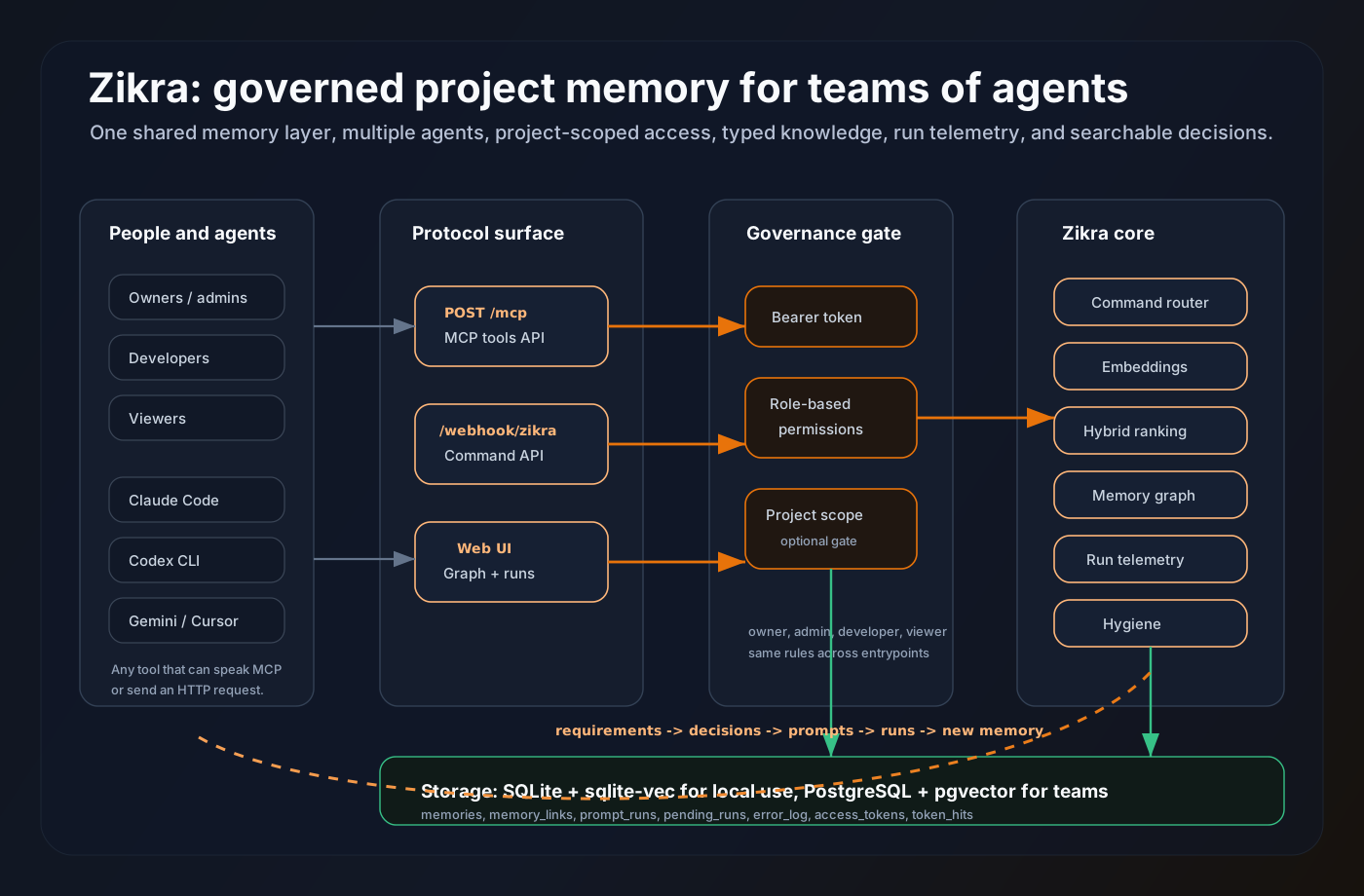
More people joined the project. Suddenly one person is on Claude Web doing research, another validating requirements and writing prompts, Claude Code just executing. Decisions made in one session were invisible to everyone else — two developers would build in opposite directions and not find out until a late-night code review argument. That's when we needed a shared memory layer with real concurrency. We moved to Postgres.
"We even use ChatGPT sometimes when Claude Web is being stubborn about writing a prompt. Doesn't matter. The same MCP server works for all of them. That's Zikra. Not built for a pitch deck. Built because we actually needed it."
— Mukarram